At a glance
Identity snapshot
Verified biographical fields, separated from interpretation.
- Foaled
- 1933, Kentucky, United States
- Life
- 1933-1947
- Sex / color
- Stallion / bay
- Hall of Fame
- Inducted 1958
Profile
The story
Seabiscuit began far from championship company. Bred by Wheatley Stable and raised at Claiborne Farm, he raced 35 times at two and lost his first 17 starts. His early management changed repeatedly, with James Fitzsimmons among three juvenile trainers. In 1936, trainer Tom Smith persuaded automobile entrepreneur Charles Howard to buy him. Smith's quieter program and the partnership with Red Pollard helped reveal a horse capable of carrying weight, sustaining speed, and competing across the country.
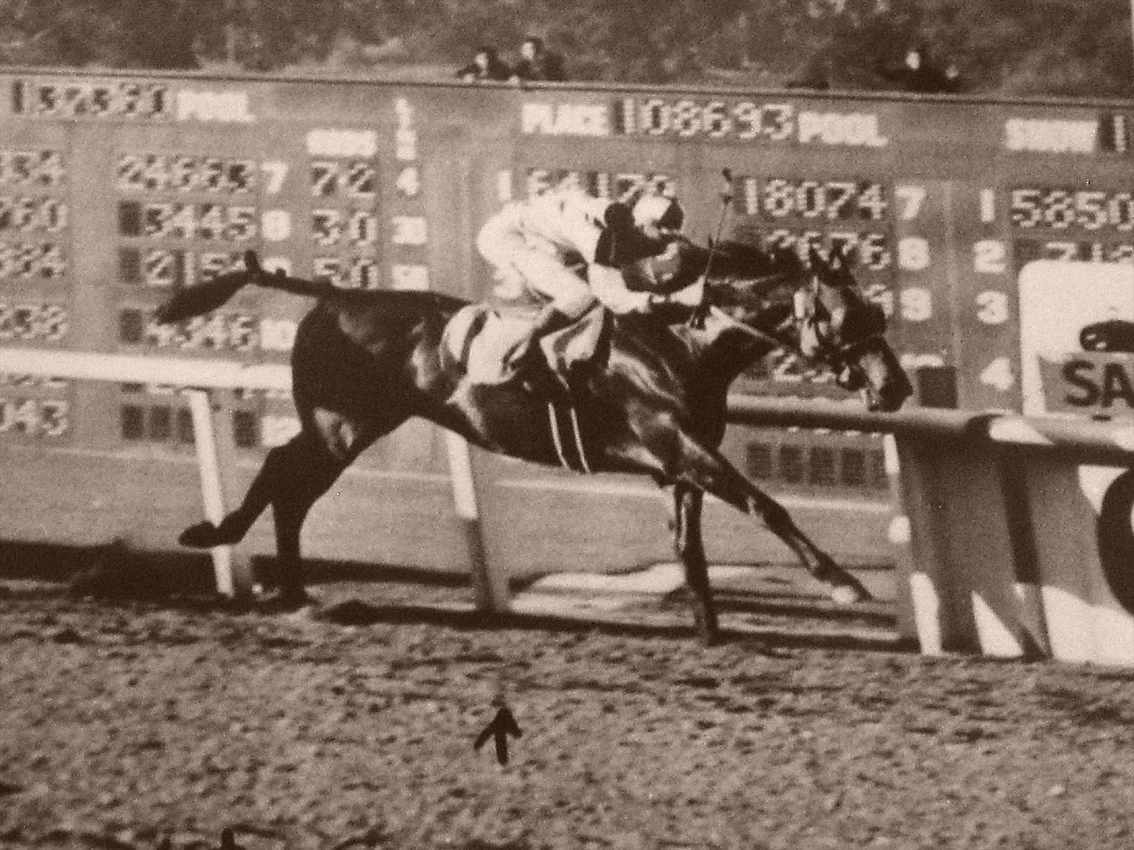
Seabiscuit won 11 of 15 races in 1937. Pollard's injury shifted the 1938 riding assignment to George Woolf, who rode him in the celebrated match against Triple Crown winner War Admiral. Smith prepared Seabiscuit to use unexpected early speed; after being challenged, he drew away to win by four lengths. Injury interrupted his career in 1939, but both horse and Pollard rehabilitated at Howard's Ridgewood Ranch. Their 1940 return culminated in the Santa Anita Handicap, a race Seabiscuit had narrowly lost three years earlier. He retired as a champion and leading money winner of his time.
Editorial analysis
Why this horse matters
Seabiscuit's importance is larger than an underdog slogan. His record documents a dramatic change in performance after ownership, training, recovery, and rider relationships changed, making him a valuable case study in horse management as well as athletic ability. His 89-start career illuminates an era when leading horses raced far more frequently and traveled nationally under handicap weights. The War Admiral match supplied public theater, but the multi-season record and comeback provide the deeper evidence of quality.
Selected record
Career highlights
A concise chronology of documented championship and major-event performances.
- 1937
Breakthrough season
Won 11 of 15 starts and was named Champion Older Male.
- 1937
National handicap campaign
Won major races from New York to Massachusetts while carrying substantial weight.
- 1938
Hollywood Gold Cup
Won the inaugural running during his championship campaign.
- 1938
War Admiral match
Defeated the reigning Triple Crown winner by four lengths at Pimlico.
- 1938
Horse of the Year
Earned the sport's highest annual honor and a second older-male championship.
- 1940
Santa Anita redemption
Returned from injury to win the race that had twice eluded him, then retired.
Live name watch
News mentioning Seabiscuit
Exact-name matches from this horse's discipline only. No fuzzy matches, recycled stories or unrelated fallback headlines.
No recent exact-name coverage for Seabiscuit appears in the monitored thoroughbred racing feeds right now.
Checked Oct 26, 2026, 1:09 AM EDT. No match means only that the current monitored feed window contains no exact reference; it is not a claim that no coverage exists elsewhere.
Open the full live news deskReference desk
Research record
Pedigree, people and career facts remain grouped by type for quick comparison.
Career record
- Career
- 1935-1940
- Starts
- 89
- Record
- 33 wins, 15 seconds, 13 thirds
- Earnings
- $437,730 (historical nominal dollars)
Pedigree
- Sire
- Hard Tack
- Dam
- Swing On
- Damsire
- Whisk Broom II
Connections
- Breeder
- Wheatley Stable
- Championship owner
- Charles S. Howard
- Championship trainer
- Tom Smith
- Principal riders
- Red Pollard and George Woolf
Reading the record
Research context
Technical and historical notes, presented as context rather than instruction.
His 35-start juvenile campaign reflects period practice and should not be treated as a direct model for modern schedules.
The Pimlico Special was a two-horse match with a walk-up start, not a modern graded-stakes field.
Cultural meaning during the Great Depression complements but does not replace analysis of the racing record.
Recorded offspring
1 horse in this archive names Seabiscuit as a parent. This is the catalog's own pedigree read in reverse, not a stud book, so it shows the offspring EquinAtlas holds records for rather than every foal that existed.
Ordering by earnings is not offered here: this snapshot records no earnings for any horse, and a list sorted by a figure nobody has would be a ranking of nothing. Foals are listed alphabetically.
Provenance
Detailed source trail
Open the institutional record behind the dossier and see exactly what each source supports.
National Museum of Racing and Hall of Fame
Seabiscuit (KY) (opens in a new tab)
Pedigree, connections, career totals, championships, match race, comeback, and death.
Accessed July 25, 2026
PBS American Experience
Biography: Seabiscuit (opens in a new tab)
Management, injury rehabilitation, comeback, and cultural context.
Accessed July 25, 2026
Library of Congress
King of the Turf: Seabiscuit (opens in a new tab)
The 1938 match and Depression-era public context.
Accessed July 25, 2026
Continue researching
Build a reading path from the record
Every connection below is generated from fields already present in the source-linked archive. It is a research lead, not a claim that two horses had equivalent careers.
Follow the recorded lineage
These links come from an explicitly named sire, dam, damsire, or a parent shared by both source records.
Racing
Hard Tack
American-bred Thoroughbred racehorse
- Recorded sire of Seabiscuit
- Hard Tack
- Shared discipline
- Racing
- Foaled within twelve years
- 1926
- Shared recorded sex category
- Stallion / bay
Racing
Whisk Broom II
race horse
- Recorded damsire of Seabiscuit
- Whisk Broom II
- Shared discipline
- Racing
- Shared recorded sex category
- Stallion / bay
Trace shared connections
These records repeat the same named owner, breeder, trainer, rider, event, or honor in the supplied data.
Racing
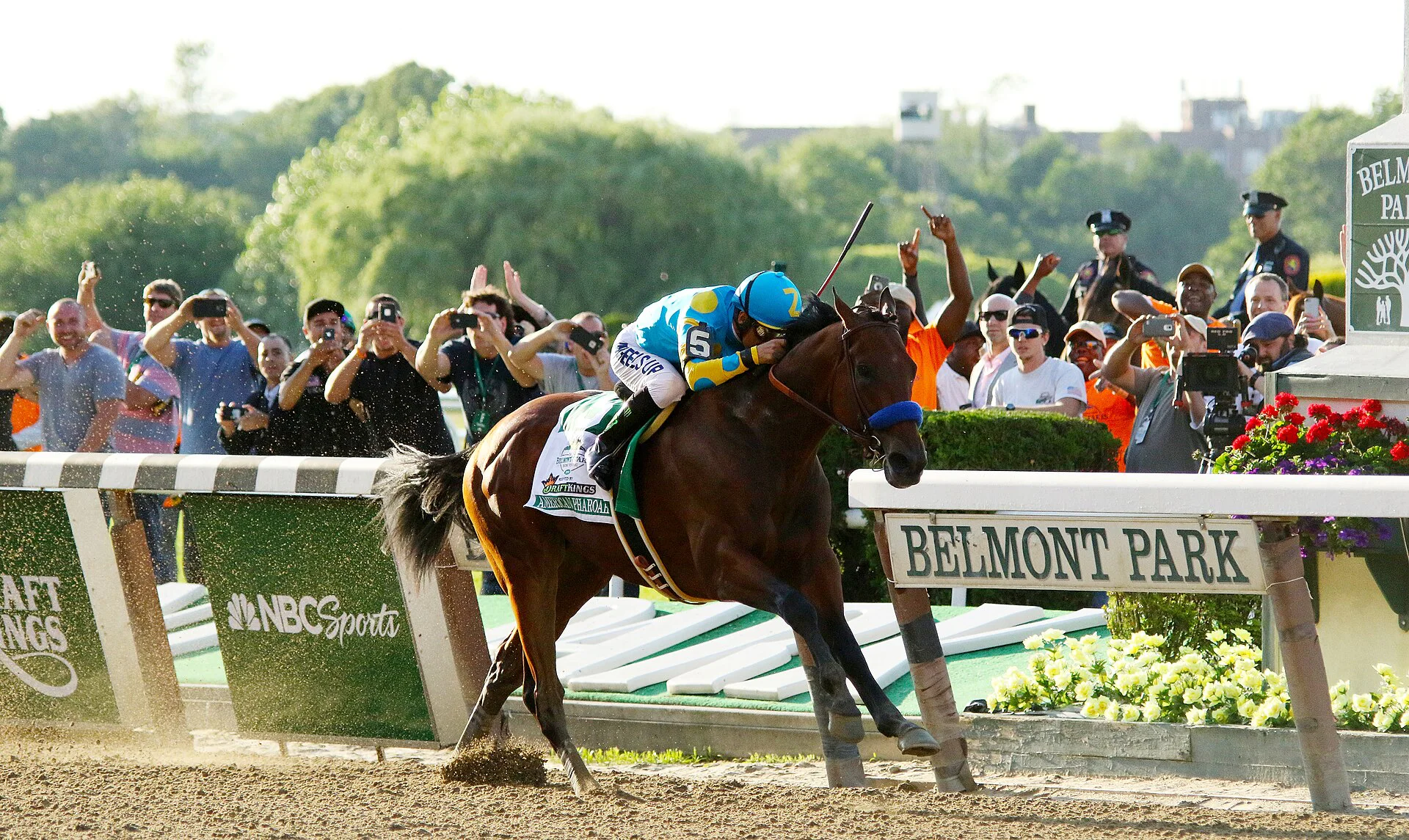
American Pharoah
The 2015 Triple Crown and Breeders' Cup Classic winner ended a 37-year drought and completed a uniquely comprehensive modern campaign.
- Shared event
- Horse of the Year
- Shared discipline
- Racing
- Shared recorded place
- Kentucky
- Shared recorded sex category
- Stallion / bay
Racing
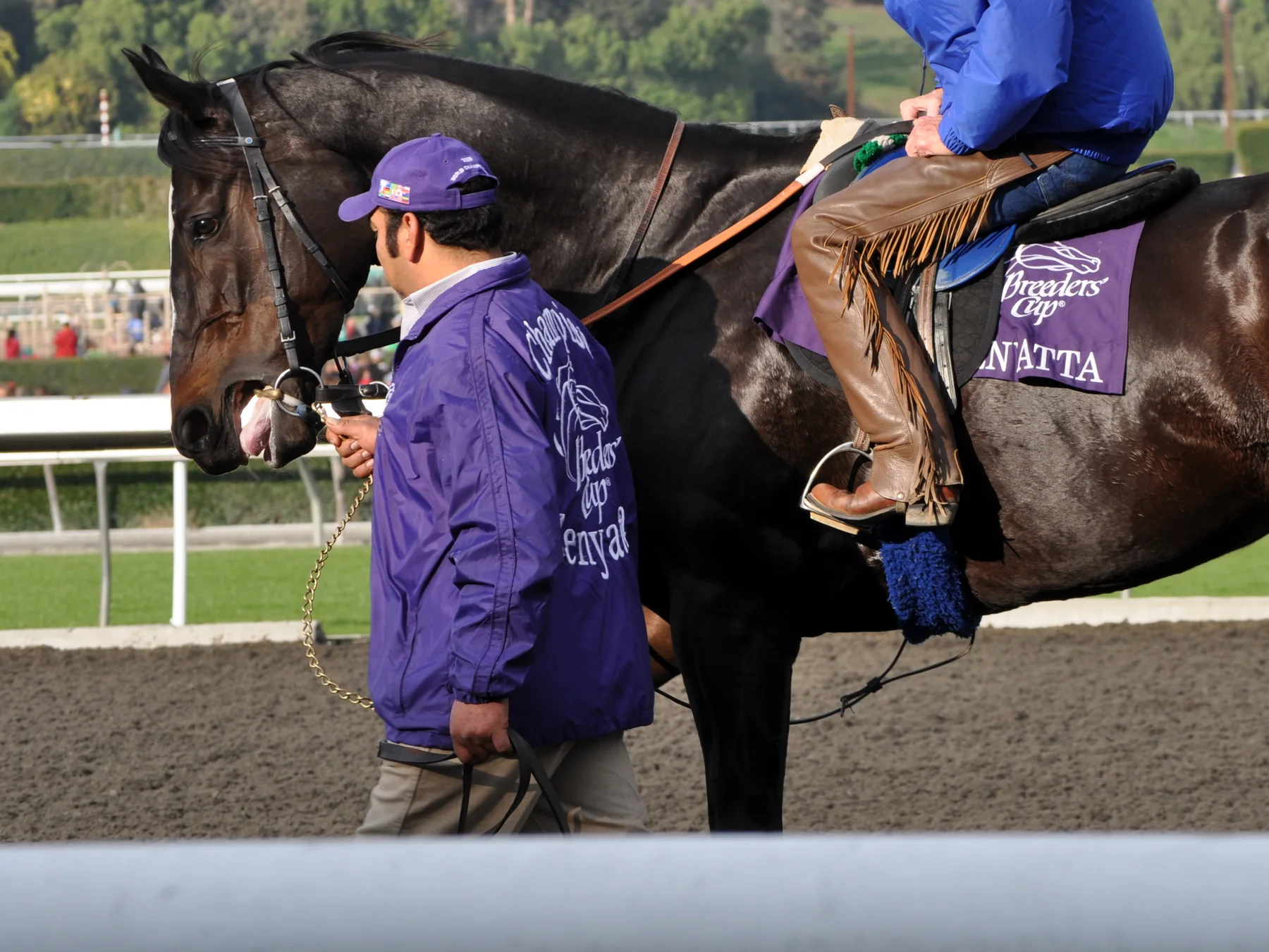
Zenyatta
Zenyatta won her first 19 starts across four seasons, became the first female Breeders' Cup Classic winner, and earned 2010 Horse of the Year.
- Shared event
- Horse of the Year
- Shared discipline
- Racing
- Shared recorded place
- Kentucky
Compare documented peers
These horses share multiple recorded identity fields, such as discipline, breed, country, sex, or foaling period.
Racing
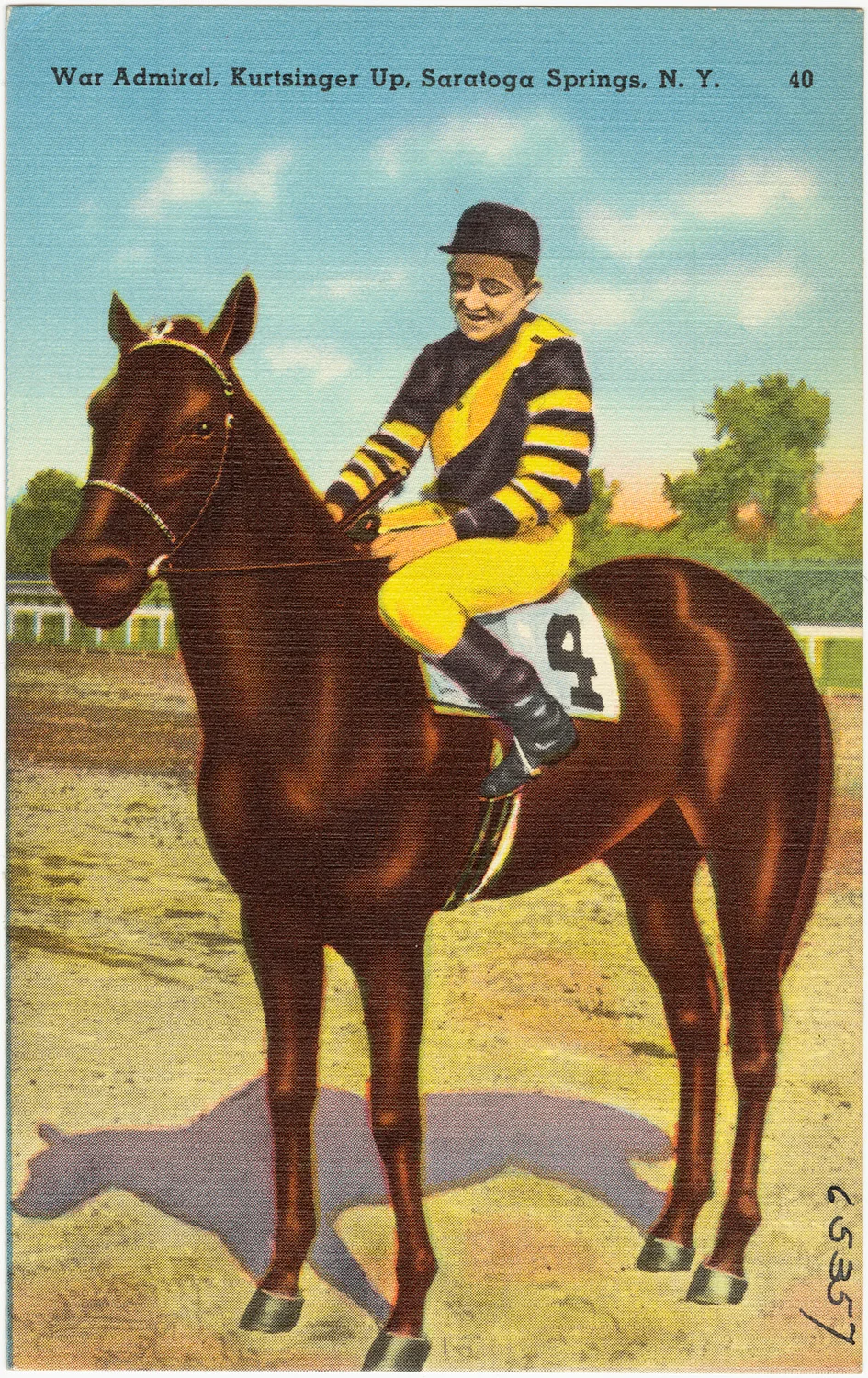
War Admiral
Man o' War's most accomplished racing son swept the 1937 Triple Crown, won 21 of 26 starts, and later became a leading sire.
- Foaled within five years
- 1934
- Shared discipline
- Racing
- Shared recorded place
- Kentucky
- Shared recorded sex category
- Stallion / bay

Racing
Nearco
Italian-bred Thoroughbred racehorse
- Foaled within five years
- 1935
- Shared discipline
- Racing
- Shared recorded sex category
- Stallion / bay

Racing
St Lite
Japanese-bred Thoroughbred racehorse
- Foaled within five years
- 1938
- Shared discipline
- Racing
- Shared recorded sex category
- Stallion / bay

Racing
Precipitation
racehorse
- Foaled within five years
- 1933
- Shared discipline
- Racing
- Shared recorded sex category
- Stallion / bay
Stay within the discipline
These source-linked records share the same discipline classification; open each profile to establish any closer comparison.

Notable horses
Trigger
horse
- Foaled within five years
- 1934
- Shared recorded sex category
- Stallion / bay

Notable horses
Brooklyn Supreme
1928 largest horse
- Foaled within five years
- 1928
- Shared recorded sex category
- Stallion / bay
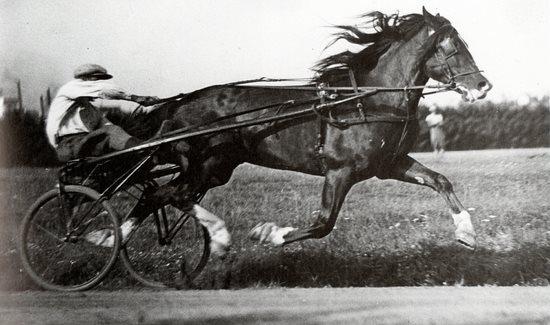
Harness racing
Eri-Aaroni
horse
- Foaled within five years
- 1932
- Shared recorded sex category
- Stallion / bay
Notable horses
Nazeer
Arabian stallion from Egypt
- Foaled within five years
- 1934
- Shared recorded sex category
- Stallion / bay
Field notebook
Questions the available evidence can support
Pedigree ledger
List each sire, dam, and damsire recorded for Seabiscuit; open the linked source before carrying a relationship into another generation.
Based on: Recorded pedigree fieldsEra comparison
Start with Seabiscuit's recorded foaling year (1933). Date every comparison and keep later commentary separate from contemporaneous results.
Based on: Recorded foaling yearConnection map
Trace the recorded breeder, owner, trainer, rider entries one source at a time. Preserve the role and date attached to each source rather than assuming a permanent relationship.
Based on: Named connections, events, or honorsIdentity language
Copy breed, studbook, sex, and place terms exactly as the source presents them; note conflicts instead of silently standardizing them.
Based on: Recorded identity fieldsSource check
Open the 3 linked sources, record the publisher and retrieval or revision date, and mark which displayed fields each source actually supports.
Based on: Linked source trail
From profile to reading room
Continue from Seabiscuit's record
4 original briefs · 33 reading minutes · 19 direct references. These are research-method companions, not additional claims about the horse.
Profile-linked brief
A finish line is not an exit plan
Retirement can mean rehabilitation, retraining, adoption, sanctuary, or another carefully matched role. Good research follows the horse beyond the final chart.
Why read this next: The editorial index explicitly connects this brief to Seabiscuit. Use its aftercare and welfare framework and 5 direct references as a method companion; the link does not add a new fact to the horse profile.
Read the original briefProfile-linked brief
Misty of Chincoteague and the herd behind the book
Marguerite Henry's 1947 novel sent generations to a real island to look for a real pony. The herd it made famous is a managed population with an owner, a permit, a population cap, and a documented history that the story only partly resembles.
Why read this next: The editorial index explicitly connects this brief to Seabiscuit. Use its heritage and folklore framework and 5 direct references as a method companion; the link does not add a new fact to the horse profile.
Read the original briefProfile-linked brief
The diving horses of Atlantic City, and what the record actually holds
A horse and rider plunged from a tower into a tank on the Steel Pier for decades, and one rider kept performing after she lost her sight. The story is famous, frequently retold, and unusually dependent on memoir and film rather than on institutional records.
Why read this next: The editorial index explicitly connects this brief to Seabiscuit. Use its heritage and welfare framework and 5 direct references as a method companion; the link does not add a new fact to the horse profile.
Read the original briefDiscipline research
Stud fee is a price tag, not a breeding verdict
The advertised fee opens a stallion dossier. Book size, opportunity, mare quality, crop age, contract terms, and the goals for the mating determine what the price can and cannot mean.
Why read this next: This bloodstock research brief shares the profile's Thoroughbred racing classification. Its 4 direct references help test context and source boundaries; the brief is not evidence about this individual horse.
Read the original briefData boundary
Unknown is not a blank to fill
This dossier publishes reviewed fields and source-backed editorial analysis only. A field that is not shown remains not established in this source-checked dossier. EquinAtlas does not infer missing results, ownership, health, availability, or commercial terms.